

Categories: genomics, public health, smoking
April 19th, 2012 3:01 pm ET -
Scott Bowen, Office of Public Health Genomics, Centers For Disease Control and Prevention
Never Let Genetics Blind You to the Harsh Reality of Cigarettes
The emerging field of genomics might one day provide some tools to help address the smoking epidemic. However, smokers should never think that their genes can protect them from devastating harms or provide an easy way for them to quit later.
On March 15, 2012, CDC announced a national media campaign to encourage smokers to quit and prevent others, especially young people, from starting. The new communications initiative is different from past efforts because it includes graphic depictions of the real life damage that smoking does. “Although they may be tough to watch, the ads show real people living with real, painful consequences from smoking,” said CDC Director Thomas R. Frieden. ” There is sound evidence that supports the use of these types of hard-hitting images and messages to encourage smokers to quit, to keep children from ever beginning to smoke, and to drastically reduce the harm caused by tobacco.”
Where There is Smoke There is Fire… Addiction, and Yet Desire To Quit
Last fall, CDC’s MMWR provided the latest data on cigarette smoking among working U.S. adults. Smoking remains the single most important preventable cause of disease and death in the U.S., yet people of all descriptions, occupations, and backgrounds are addicted to nicotine. Most want to stop, but find it very difficult. More than one half had made an attempt to quit in the past year.
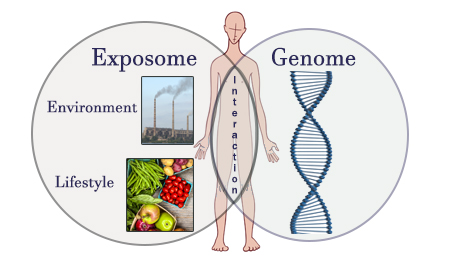
In recent years, more attention has been paid to the potential contribution of one’s genes to the risks of smoking addiction and harms. To rephrase a common saying among geneticists: “Genes spill the fuel, but environment lights the match.” In other words, one’s genome may predispose one to risk for certain diseases, but it is only when that vulnerability is combined with certain exposures that harm occurs. Among behaviors that impact the incidence of disease, smoking is one of the most powerful “fire starters” in the world. Some have argued that awareness of increased genetic risk (e.g., through family health history or valid genetic test) could lead some people to make positive changes in their behaviors including smoking cessation. The good news is that people who do stop smoking sharply reduce their risk for disease and early death, and the earlier they stop, the better.
Post a Comment -
Read more
Categories: genomics, public health
April 12th, 2012 12:23 pm ET -
Muin J Khoury, Director, Office of Public Health Genomics, Centers for Disease Control and Prevention

The April 2012 special issue of the journal Public Health Genomics includes 13 articles from the many presentations at the 4th National Conference on Genomics and Public Health in the United States: “Using Genetic Information to Improve Health Now and In the Future”. The three-day conference sponsored by the Centers for Disease Control and Prevention, the National Institutes of Health and other cosponsors was held December 2010 in Bethesda, Maryland, and attended by more than 700 participants. The conference brought together clinical and public health scientists and practitioners. The published articles showcase current work and consider future directions for applications of genomics to improve health, including behavioral interventions to prevent and control diseases, genetic services across the lifespan; family history tools for primary care; training and education of the public health workforce, and addressing health disparities through a genomics lens. The conference articles highlight the need for a strong scientific evidence base for applying genomics to improve health and prevent disease, consider gaps in the current health care delivery system, and address the schism between traditional public health departments and clinical care. The articles also discuss the implications of “genohype” and internet availability of genomic information on the development of new communication strategies for public health practice.
Post a Comment -
Read more
Categories: EGAPP, evidence-based medicine, genomics
March 28th, 2012 2:15 pm ET -
Michael P. Douglas, Office of Public Health Genomics, Centers for Disease Control and Prevention
W. David Dotson, Office of Public Health Genomics, Centers for Disease Control and Prevention
A new IOM report makes recommendations that aim to ensure that progress in omics-based test development is grounded in sound scientific evidence and is reproducible, resulting in improved health care and continued public trust in research. Another new IOM roundtable workshop report discussed the differences in evidence required for clinical use, regulatory oversight, guideline inclusion, coverage, and reimbursement of genomic diagnostic tests and focused on ways to clarify pathways for using such tests in clinical settings. Recently, the NIH made a beta version of Genetic Test Registry (GTR) available online. The GTR provides a central location for voluntary submission of genetic test information by developers. The GTR includes information on the test’s purpose, methodology, validity, evidence of the test’s usefulness, and laboratory contacts and credentials. The
information provided is not verified by NIH, but assumed to be accurate by the submitting party. The GTR will not obviate the need for evidence-based evaluation of genetic tests and development of recommendations. However it is on track towards becoming useful to advance research and clinical practice.
1 Comment -
Read more
Categories: colorectal cancer, genomics
March 22nd, 2012 11:35 am ET -
Guest Blogger
Deb Duquette, MS, CGC, Sarah Mange, MPH- Michigan Department of Community Health
Cecelia Bellcross, PhD, MS- Emory University
Heather Hampel, MS, CGC- The Ohio State University
Kory Jasperson, MS, CGC- Huntsman Cancer Institute
Authors are all from the Lynch Syndrome Screening Network (LSSN) Founding Board of Directors
Every day, about 400 people in the United States are diagnosed with colorectal cancer. Approximately twelve of them have Lynch syndrome, a hereditary condition that increases the risk of colorectal cancer and other cancers. Identifying people with Lynch syndrome could have substantial health benefits for them, their families, and communities.
1 Comment -
Read more
Categories: genomics, personalized medicine
March 15th, 2012 1:17 pm ET -
Muin J Khoury, Director, Office of Public Health Genomics, Centers for Disease Control and Prevention

In March 2012, a prominent health insurer in the United States released a white paper entitled: “Personalized Medicine: trends and prospects for the new science of genetic testing and molecular diagnostics” By analyzing their own claims data, the report suggests that in 2010, the cost of genetic and molecular diagnostic testing for its members was about $500 million; nearly 40 percent was for molecular testing for infectious diseases, 16 percent for cancer, and the rest for a variety of conditions including inherited disorders. The report estimates that spending on molecular and genetic tests increased by about 14 percent a year between 2008 and 2010, reaching an estimated $5 billion in 2010. Based on different growth scenarios, the report estimates that U.S. spending for genetic testing could reach between $15 billion and $25 billion by 2021. While three-quarters of doctors surveyed in the report believe that genetic testing allows for more personalized therapy, 56 percent think that new genetic tests will increase health care costs, compared with 19 percent who think genetic testing will reduce health care costs. “We are now in the era of truly personalized care,” said Reed Tuckson, chief of medical affairs at UnitedHealth Group. “However, this also poses significant challenges to a system that is increasingly unaffordable.”
4 Comments -
Read more
Categories: genomics, heart disease
March 1st, 2012 3:06 pm ET -
Guest Blogger
Debra Duquette, MS, CGC, Genomics Coordinator & Beth Anderson, MPH, Genomics Epidemiologist, Michigan Department of Community Health
A Michigan Story on Lessons Learned and Action Steps to Take
The winter months have arrived and with them comes a certain madness, specifically March Madness. On March 12, 2012 the NCAA men’s college basketball tournament will commence. Most of the focus will be on cheering for the teams we picked to win our brackets; however, as Michigan learned last year, this isn’t the only thing we need to focus on.
On March 3, 2011, with less than 30 seconds left in overtime in Fennville High School’s final regular season men’s basketball game, a winning layup was scored that brought Fennville’s team an undefeated record. With district playoffs in Fennville’s future, the gymnasium was full of celebration. Within moments, the crowd went silent as their star player collapsed to the ground. Wes Leonard, the player who had scored the winning basket moments before was now unconscious. Over 2,000 fans stood stunned, waiting for paramedics to arrive. Although an AED was present at the school, it was not charged and CPR was not performed because people did not think that cardiac arrest could be at fault in someone so young. Wes was later declared dead at a local hospital and the autopsy showed that he died of cardiac arrest due to an enlarged heart.
Sudden deaths of young athletes bring attention to an important public health problem known as sudden cardiac death of the young (SCDY), which occurs in non-athletes, too. On average, an estimated 66 athletes die suddenly of cardiac cause each year in the United States. Each year in Michigan alone, approximately 300 people aged 1-39 years die suddenly of a cardiac cause. Importantly, SCDY is known to have a strong hereditary component in many cases.
5 Comments -
Read more
Categories: family history, genomics
February 23rd, 2012 1:05 pm ET -
Muin J Khoury, Director, Office of Public Health Genomics, Centers for Disease Control and Prevention

When it comes to the use of genomic tests and technologies in practice, Dr Al Berg is a skeptic. Dr Berg is the founding chair of the CDC-sponsored Evaluation of Genomic Applications in Practice and Prevention (EGAPP) Working Group that has been evaluating genomic tests for more than 5 years. He also chaired the National Institutes of Health State-of-the-Science Conference on family history. The EGAPP group has recommended only one genomic test for use in clinical practice among a handful of tests they have assessed so far. The NIH conference found “insufficient evidence” for supporting systematic collection of family history in primary care. Since then, Dr Berg has repeatedly urged caution regarding claims that genetic tests and family history can improve health outcomes.
3 Comments -
Read more
Categories: genomics, whole genome sequence
January 12th, 2012 1:18 pm ET -
Marta Gwinn, Consultant, McKing Consulting Corp, Office of Public Health Genomics, Centers for Disease Control and Prevention

There was no cholera in Haiti until October 2010, when epidemic cholera swept the country. Within 6 months, more than 250,000 people were sickened and 4,000 died. A catastrophic earthquake earlier that year had exacerbated human and environmental risks by displacing millions of people and disrupting public health infrastructure. But there would have been no epidemic without the bacterium, Vibrio cholerae. How did the pathogen enter the picture?
1 Comment -
Read more
Categories: family history, genomics
December 15th, 2011 12:28 pm ET -
Guest Blogger
Ruta Sharangpani MD, MPH
Bureau of Disease Control Prevention and Epidemiology
Michigan Department of Community Health
Debra Duquette, MS, CGC
Genomics Coordinator
Michigan Department of Community Health
During the holiday season, many of us will be watching our favorite holiday movies for the umpteenth time. Some of our favorites (according to Gayot, Moviefone and Yahoo are Home Alone, A Christmas Story, A Charlie Brown Christmas, and It’s a Wonderful Life. Most holiday movies seem to have relatives as central characters and family gatherings as a major theme. One of the reasons that holiday movies may be so popular is they remind us of our own wishes and fears.
1 Comment -
Read more
Categories: genomics
December 1st, 2011 12:35 pm ET -
Muin J Khoury, Director, Office of Public Health Genomics, Centers for Disease Control and Prevention
In June 2011, the CDC Office of Public Health Genomics launched a community wide consultation process to develop priorities for the field of public health genomics in the next 5 years. This process was initiated as part of strategic visioning for integrating the emerging tools of genomics into practice and assuring the success of these new tools in improving population health. The process was conducted at a time of a widening gap between the rapid scientific advances in genomics and their impact on improving population health. The University of Michigan Center for Public Health and Community Genomics and Genetic Alliance spearheaded an effort to seek, collate and synthesize advice and recommendations from numerous stakeholders and constituents. The effort culminated in a workshop conducted on September 14, 2011 in Bethesda, Maryland. The results of the consultation, discussions and deliberations are summarized in a report published by the University of Michigan. Highlights of the recommendations are summarized here but readers should consult the full report. Some of the recommendations include:
Post a Comment -
Read more